

Dr. Predrag Matić explains the benefits of laser vein surgery

Jun 08, 2026
Varicose veins are a common problem that does not always end with aesthetic discomfort. Pain, swelling, heaviness in the legs, cramps, and fatigue may indicate impaired function of the venous system, which is why it is important to react on time. Dr. Predrag Matić, vascular surgery specialist, explains when an examination is needed, how the diagnosis is made, and what the benefits of laser vein surgery are.
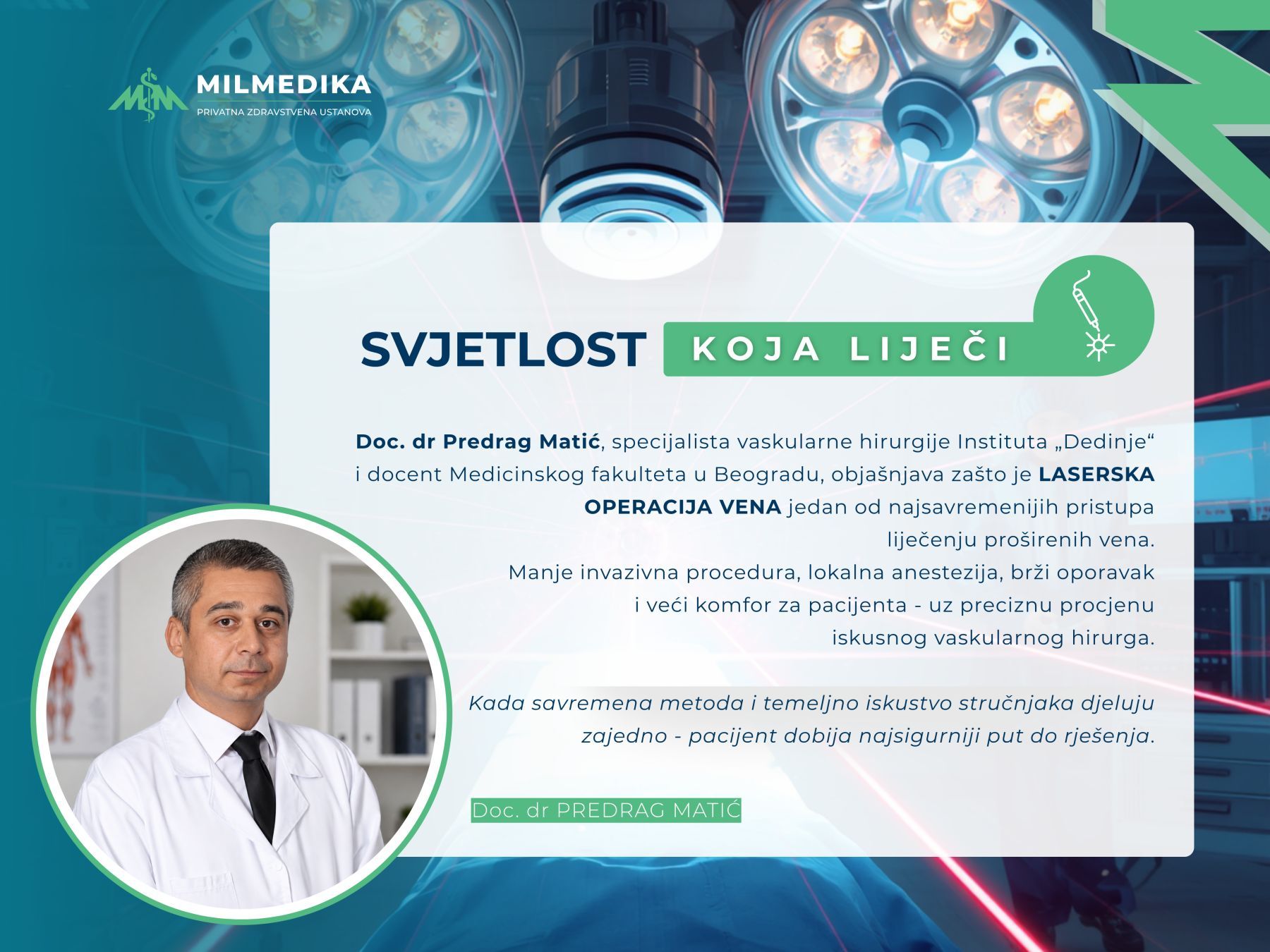
Dr. Matić is a vascular surgery specialist with many years of clinical, surgical, teaching, and scientific research experience. His professional focus includes the diagnosis and surgical treatment of arterial and venous diseases, with a particular interest in endovascular procedures and modern surgical treatment of chronic venous disease and varicose veins. You can read more about his professional work, experience, and areas of expertise in the biography of Dr. Predrag Matić.
Varicose veins are a problem that many patients underestimate for years. At first, they often see them as an aesthetic concern: visible veins on the legs, discomfort during the summer months, avoiding shorter clothing, or feeling that their legs no longer look the way they used to. However, venous disease does not always stop at appearance.
Pain, swelling, heaviness in the legs, itching, night cramps, a feeling of “restless legs,” and fatigue that repeats day after day are often signs that the problem lies deeper — in the impaired function of the venous system. This is why varicose veins are not only an aesthetic issue but a condition that requires expert assessment and timely treatment.
Dr. Predrag Matić points out that it is estimated that around 20% of the adult population experiences problems related to the venous system, with women affected more often than men.
When your legs start sending warning signs
Chronic venous disease usually does not begin dramatically. It develops gradually: through a feeling of heaviness in the legs after prolonged standing, swelling around the ankles, visible spider veins or varicose veins, pain, night cramps, and recurring discomfort.
The problem is that patients often get used to these symptoms. They begin to see them as a consequence of tiredness, age, work, standing for long periods, or genetics. Still, when symptoms keep returning and the quality of everyday life begins to suffer, it is time for an examination.
When it comes to venous disease, waiting usually does not bring anything good. What may seem like a “minor problem” today can progress over time, becoming more persistent, more painful, and more difficult to treat. One of the more serious complications of untreated chronic venous disease is a venous ulcer — a painful wound on the lower leg that heals with difficulty, requires long-term wound care, and significantly affects the patient’s quality of life.
That is why it is most important to react on time — while the problem is still under control and while treatment can be performed more comfortably, more precisely, and with better results for the patient.
What are the benefits of laser vein surgery?
Modern vascular surgery has significantly changed the way varicose veins are treated today. Classical surgery is no longer the only option for patients who have an indication for surgical treatment. One of the most important modern methods is endovenous laser ablation, better known as laser vein surgery.
The essence of this method is not simply to “remove” a visible vein, but to treat the cause of the problem. Before deciding on treatment, a clinical examination and ultrasound assessment of the venous system are necessary. Only when reflux is confirmed, meaning an abnormal flow of blood through the vein, can it be determined whether the patient is a candidate for a laser procedure.
In suitable patients, the diseased vein is closed from the inside using laser energy. In this way, the procedure does not merely hide the consequence but acts directly on the source of the problem.
What does the laser procedure look like?
One of the greatest advantages of laser vein surgery is patient comfort. The procedure is performed under local anesthesia, without the need for a classical surgical approach and without a long hospital stay.
The procedure takes around one hour on average, depending on the findings and whether one or both legs are being treated. During the intervention, the patient is awake and able to communicate with the medical team. After the procedure is completed, the patient gets up and goes home on their own feet.
For many patients, this is the key difference. Fear of surgery is often the reason why they postpone an examination for years. When they realize that a modern approach does not have to mean a long hospitalization, a large incision, and a difficult recovery, the decision to finally address the problem becomes much easier.
Laser vein surgery enables faster recovery, a better aesthetic result compared to classical surgery, and a quicker return to everyday activities.
Laser treatment is not the right solution for everyone
Although this is a modern and effective method, it is important to emphasize that laser vein surgery is not intended for every patient.
Not every vein is suitable for the same procedure, and not every patient is a candidate for the same type of treatment. This is why an examination by a vascular surgeon is a key step, while ultrasound assessment of the veins is necessary in order to make the right decision.
Only after the examination can the condition of the venous system be clearly assessed, reflux confirmed or ruled out, and the best therapeutic approach recommended — whether that means monitoring, conservative treatment, or a laser procedure.
The right treatment does not begin with an intervention, but with an accurate diagnosis.
The first step is an examination
Varicose veins should not be seen as a problem that has to be tolerated for years. If there is pain, swelling, heaviness in the legs, night cramps, itching, visible veins, or a feeling of chronic fatigue in the legs, the first step is an examination.
An examination by a vascular surgeon and an ultrasound assessment make it possible to clearly see the condition of the veins and recommend the most appropriate approach for the patient — whether that means monitoring, conservative therapy, or modern procedures such as laser vein surgery.
So do not wait until your veins become a daily burden. An examination is the first step toward a solution based on precise assessment, expert knowledge, and experience in treating venous disease.
Schedule your appointment at Milmedika Clinics.